Walter Senguer
Senior UI/UX Artist & Designer
WALTER SENGUER / SELECTED WORK
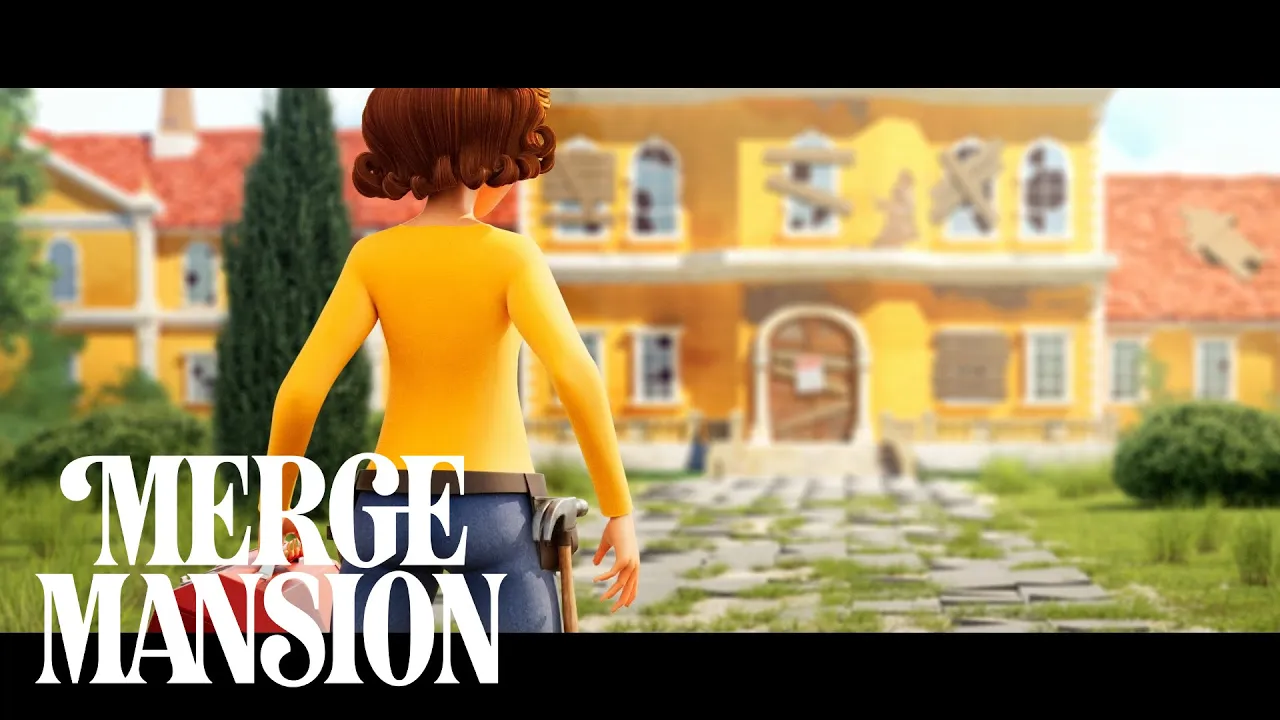
Merge Mansion
Designing scalable LiveOps systems, seasonal meta-features, and data-driven minigames for Metacore’s global puzzle phenomenon, backed by end-to-end user flows, wireframes, and A/B test iterations.
ROLE
Senior UI/UX Artist & Designer
STUDIO / PUBLISHER
Metacore
PLATFORM & ENGINE
iOS, Android
KEY IMPACT
+5% ARPU Uplift · +20% Playtime · 60M+ Downloads
Context & Contribution
THE CHALLENGE
Sustaining engagement at scale
With millions of active players across early, mid, and end-of-content (EOC) stages, Merge Mansion needed repeatable LiveOps frameworks and long-term seasonal goals. The UX challenge was designing complex systems, competitive leagues, multi-month card albums, and Core Support Events (CSE) that felt effortless to understand, fair in their RNG/matchmaking, and free of progression dead ends.
MY CONTRIBUTION
End-to-end UX ownership & systems thinking
As a Feature UX Owner across core LiveOps initiatives, I led the end-to-end UX pipeline in Figma, from player journeys, information architecture, and interactive wireframes to edge-case specifications and A/B test iterations. Working closely with Economy Designers, Engineers, and Data Analysts, I translated live telemetry and player research into measurable uplifts in engagement and monetization.
FEATURE 01
COMPETITIVE UX · MATCHMAKING · RETENTION
Boulton Leagues (Competitive Late-Game Loop)
Boulton Leagues: Always-On End-of-Content Competition
To eliminate post-content churn, I designed the end-to-end UX loop (entry → point tracking → tier leaderboard → season results) for Boulton Leagues, an always-on competitive layer for late-game players.
Zero Dead-End Progression: Designed seamless fallback states using Infinite Trades so End-of-Content players without active story tasks always have a clear, fair path to earn league points.
Frictionless Auto-Join & Season States: Streamlined entry modals to maximize active matchmaking participation and clarified active, cooldown, and promotion/demotion states.
Validated Impact: In the Mansion+ expansion A/B test, the feature drove +5% ARPU, +4% diamond spend, +3% conversion, and +2% session length.

01 / CORE LOOP & LOGIC FLOW
End-to-End League Loop — Point Sourcing, EOC Fallback & Tier Outcomes

02 / EDGE CASE ARCHITECTURE
End-of-Content (EOC) Fallback — Activating Trade V2 Point Sourcing & Info Pop-up

03 / LOW-FIDELITY WIREFRAMES
Core User Journey Wireframes — Entry Modal, Onboarding Rules & Leaderboard Structure

04 / MID-FIDELITY UI ITERATION
Visual Hierarchy & Component Layout — Season Start, How It Works & League Standings

05 / FINAL IN-GAME UI
Polished Production UI — Character Integration, Progression Rules & Live Leaderboard
FEATURE 02
META-PROGRESSION · INFORMATION ARCHITECTURE · RNG UX
Card Collection (Seasonal Meta-Feature)
Card Collection (Detective Story): 90-Day Seasonal Album
Owned the end-to-end UI/UX for Card Collection, a 60–90-day seasonal album where players earn Evidence Envelopes across the game, collect 1★–5★ cards, complete themed sets, and solve full Cases for grand rewards.
Scalable Album Architecture: Designed a clear visual hierarchy across 100+ cards and dozens of sets so players can immediately answer "What did I get?", "What changed in my progress?", and "What should I do next?".
Softening RNG & Duplicate Friction: Built visual progress framing at both set and case levels alongside an Evidence Exchange loop that converts duplicate cards into forward momentum.
Supporting LiveOps Spikes (XL / Boom): Designed the entry/exit communication and visual pack differentiation for mid-season XL/Boom events that temporarily upgrade pack rewards.
Research & Economy Iteration: Post-event surveys validated strong visual appeal and immediate mechanical comprehension; subsequent A/B iterations refined duplicate exchange sinks and pacing transparency to balance fairness perception with healthy economy sinks.

01 / GAME DESIGN HANDOFF & BENCHMARKING
Initial GD Wireframes & Competitive Analysis — Collection Structure & Wild Card Concept

02 / CORE LOOP & ECONOMY FLOW
End-to-End Collection Loop — Pack Earning, Wildcard Crafting & Rewards

03 / SYSTEM ARCHITECTURE & SCREEN FLOW
Information Architecture — Navigation Paths, Pack Probabilities & Store Entry

04 / LOW-FIDELITY WIREFRAMES
Core Experience Wireframes — Album Overview, Star Store & Pack Reveal

05 / MID-FIDELITY UI ITERATION
Visual Hierarchy & Thematic Layout — Collection Sets, Evidence Room & Card Drop

06 / FINAL IN-GAME UI
Polished Production UI — Detective Album, Duplicate Exchange & Multi-Card Reveal

07 / SUPPORTING EVENT (XL / BOOM)
Clue Surge Event (Wireframe vs. Final UI) — Limited-Time XL Pack Upgrade Modal
FEATURE 03
UX ARCHITECTURE · ONBOARDING FUNNEL · SYSTEM ITERATION
Archaeological Dig (Core Support Event)
Archaeological Dig: Minigame & Evergreen Museum Loop
As a UX Designer (Feature Owner), I defined end-to-end UX flows, screen hierarchy, and interaction states for Archaeological Dig—a tile-tapping artifact discovery minigame with an evergreen museum collection—and delivered complete UX specs and wireframes for the UI team’s final visual execution.
Core Support Event (CSE) Integration: Designed the streamlined transition from a standalone secondary board to an integrated CSE loop, allowing players to earn digging tokens via main-board merges and bubble bursts without event fatigue.
Data-Driven Funnel & Difficulty Iteration: Partnered with Economy and Data teams to smooth early difficulty spikes, introduce empty-tap compensation tokens, and optimize gate-claim entry flows (+7pp gate-claim lift).
Research-Backed Trust & Impact: Translated user-testing insights (aligning grid silhouette scaling with tap costs for fair player perception) into UX refinements that drove +2.5% ARPU, +7% cumulative playtime, and +6.8% merge goals completed in live A/B testing.

01 / ARCHAEOLOGICAL DIG USER FLOW
Core Support Event (CSE) Architecture — Main Board Currency Sourcing & Minigame Loop

02 / LOW-FIDELITY WIREFRAMES
UX Specifications & Layout — Event Entry, Digging Grid & Evergreen Museum Shelves

03 / FINAL UI IMPLEMENTATION (UI TEAM HANDOFF)
Production Visual Execution — Excavation Area, Artifact Silhouettes & Museum Progress
04 / INTERACTIVE PROTOTYPE & PLAYTESTING
Interactive Playtest Prototype — Validating Core Loop & Pacing with VIP Players
Working on Merge Mansion reinforced a core principle of F2P UX: great LiveOps design is equal parts psychology, economy, and clarity. Whether softening RNG friction in a 90-day card album, eliminating dead-ends for End-of-Content players, or smoothing early minigame funnels, every UX decision was validated through live telemetry, player research, and iterative A/B testing.